Typhoid injection for food handlers in Malaysia: the rules, where to get it and how often
If you cook, serve or handle food for a business in Malaysia, from a restaurant or stall to a factory or caterer, the law requires you to have a typhoid injection (suntikan typhoid) and a food handler training certificate. Here is what the rules say, how often you need the jab, and where to get it.
Key points
- Under the Food Hygiene Regulations 2009, every food handler must be medically examined and vaccinated, which in practice means the anti-typhoid injection, and must hold a food handler training certificate.
- Owners must not employ food handlers who aren’t trained and vaccinated, and must keep the records for inspection. Penalties go up to RM10,000 or 2 years in jail.
- Food handlers are usually asked to repeat the injection every 3 years. Some councils and clinics advise every 2 years, so check your local council’s rule.
- Private GP clinics give the typhoid injection, and some city councils run their own injection units. Bring your MyKad or passport.
- The injection is safe for most people. Side effects are usually a sore arm, mild fever or headache for a day or two.
Do food handlers need a typhoid injection? What the law says
Yes. The Food Hygiene Regulations 2009, made under the Food Act 1983, set three requirements:
- Training (regulation 30): every food handler must attend a food handler training course and hold a Certificate of Food Handlers Training from a training institution recognised by the Ministry of Health.
- Medical examination and vaccination (regulation 31): every food handler must be medically examined and vaccinated by a registered doctor. The Ministry of Health and local councils apply this as the anti-typhoid injection.
- Employers (regulation 11): the owner of food premises must not employ a food handler who hasn’t been trained and vaccinated, and must keep training and vaccination records for inspection.
Each of these offences carries a penalty of up to RM10,000, up to 2 years in jail, or both, and can be settled with a compound. Food handlers who are ill with, or carry, an infection that can spread through food must report it and stop handling food until a doctor certifies them fit.
Who counts as a food handler?
Under the regulations, a food handler is anyone who prepares or serves food, or touches food, food equipment or surfaces that food touches, in food premises. That includes:
- cooks, kitchen helpers and dishwashers in restaurants, cafés and canteens
- hawkers, stall and food truck operators
- waiters and staff who serve or pack food
- workers in food factories, bakeries and catering businesses
Local councils check typhoid and training records when you apply for or renew a food business licence, and health inspectors check them during inspections. In January to April 2026, for example, Penang health officers inspected more than 4,000 food premises and found workers without typhoid vaccination at seven of them.
How often do you need the typhoid injection?
The injectable typhoid vaccine protects for about 3 years, so food handlers are usually asked to repeat it every 3 years. This is the interval the Ministry of Health has stated and many councils use. Some clinics and councils ask for a booster every 2 years, which matches international travel advice, so check what your local council requires when you renew your licence.
Keep your typhoid injection card or record safe: you will need to show it to your employer and inspectors, and it tells you when the next dose is due.
Where to get a typhoid injection
- Private GP clinics: the most common option. Many give the injection on a walk-in basis and issue a card. It is worth calling ahead to check they have the vaccine in stock.
- City council injection units: some councils run their own service for food handlers, such as Kuala Lumpur City Hall’s (DBKL) injection unit and Johor Bahru City Council’s clinic. Check your council’s website for opening times and payment methods.
- Government health clinics: availability varies, so call your nearest Klinik Kesihatan before going.
What to bring: your MyKad, or passport for foreign workers, and your food handler training certificate if you have one. Some councils also ask for a photo and your premises details.
Cost: prices vary between clinics and councils, so ask when you call.
The food handler course (kursus pengendali makanan)
The vaccination goes together with food handler training. The course is run by training schools recognised by the Ministry of Health, covers food hygiene, personal hygiene and food-borne diseases, and usually takes a few hours. Some recognised providers also run it online. Once you pass, you receive a certificate to show your employer and the local council.
Ask your employer or local council which recognised training providers they accept.
About the typhoid vaccine: safety and side effects
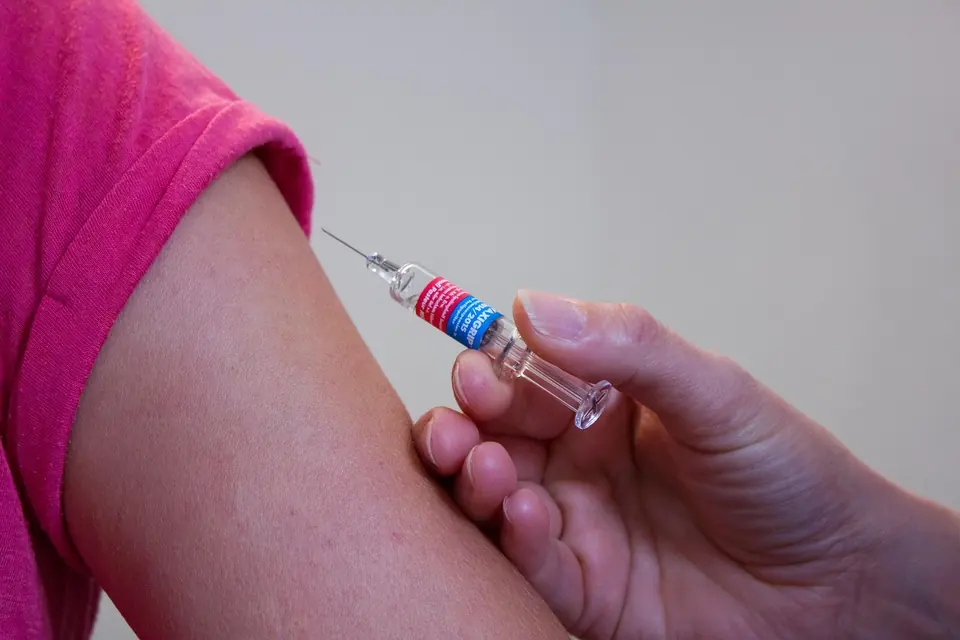
The typhoid injection used for food handlers is a single dose given in the upper arm. It can be given from age 2.
- Common side effects: pain, redness or swelling where the injection was given, mild fever, headache or feeling unwell for a day or two.
- Talk to the doctor first if you have had an allergic reaction to a vaccine before, are pregnant, or have a weakened immune system. If you are moderately or severely unwell on the day, the injection may be delayed.
- The vaccine is not 100% effective, so good hand-washing and food hygiene still matter.
Newer typhoid conjugate vaccines, used in some countries from 6 months of age, give longer protection. Ask your doctor what is available.
What is typhoid?
Typhoid fever is caused by the bacterium Salmonella Typhi, which only lives in humans. It spreads through food or water contaminated with the faeces of an infected person. Some people who recover keep carrying the bacteria and can pass it on through food they handle without feeling ill, which is why food handlers are screened and vaccinated.
Symptoms include a prolonged high fever, tiredness, headache, stomach pain, constipation or diarrhoea, and sometimes a rash. Typhoid needs antibiotics, and drug resistance is increasingly common. In Malaysia it is a notifiable disease. Cases are relatively uncommon, but outbreaks have been traced to infected food handlers, such as one in Sabah in 2019 linked to a restaurant worker.
See a doctor if you have a fever lasting more than 3 days, especially after eating from places with poor hygiene or travelling to areas where typhoid is common. For other causes of fever and food-borne illness, see our guides to dengue and stomach pain.
Find a clinic for your typhoid injection
Many GP clinics give the typhoid injection to food handlers. Our directory lists GP clinics across Kuala Lumpur, Selangor and other states, including clinics that list vaccinations among their services and clinics open at weekends. Call ahead to check the vaccine is in stock.
Browse the clinic directoryFrequently asked questions
Is the typhoid injection compulsory for food handlers in Malaysia?
Yes. The Food Hygiene Regulations 2009 require food handlers to be medically examined and vaccinated, which is applied as the anti-typhoid injection, and to attend food handler training.
How often do food handlers need a typhoid injection?
Usually every 3 years, as the injectable vaccine protects for about 3 years. Some councils and clinics ask for every 2 years, so check with your local council.
What is the fine for not having a typhoid injection?
Food handlers who aren’t vaccinated, and owners who employ them, can be fined up to RM10,000, jailed for up to 2 years, or both. Offences can be compounded.
Where can I get a typhoid injection?
At private GP clinics, and at council injection units in some cities, such as DBKL in Kuala Lumpur and MBJB in Johor Bahru. Availability at government health clinics varies, so call ahead.
Can foreign workers get the typhoid injection?
Yes. Clinics give it to foreign food handlers too. Bring your passport.
What are the side effects of the typhoid injection?
Usually a sore arm, redness or swelling, and sometimes mild fever or headache for a day or two. Tell the doctor if you are pregnant, have a weak immune system or have had a vaccine allergy.
Who counts as a food handler?
Anyone who prepares, serves or touches food, food equipment or food-contact surfaces in food premises, including cooks, kitchen helpers, waiters, hawkers and food factory workers.
Sources
- Food Hygiene Regulations 2009, P.U.(A) 95/2009 (Food Act 1983)
- Kuala Lumpur City Hall (DBKL) — Health and Environment Department
- Majlis Bandaraya Johor Bahru — Anti-typhoid injection for traders and food handlers
- Perbadanan Labuan — Health certificate for food handlers
- Malay Mail — Deputy minister on food poisoning cases and typhoid injections (Oct 2013)
- Malay Mail — Penang orders closure of 177 food premises over hygiene violations (Jun 2026)
- World Health Organization — Typhoid fact sheet
- US CDC — Typhoid vaccine information statement