Pico laser for melasma in Malaysia: what it can do, the risks, and the 2026 rules
Pico laser is one of the most advertised treatments for melasma and pigmentation in Malaysia. Here is what the evidence actually shows, why melasma keeps coming back, the risks for Asian skin, and how Malaysia’s 2026 rules on aesthetic lasers protect you.
Key points
- Melasma is a long-term skin condition. Treatments can fade it, but none cure it, and it often comes back.
- Daily sunscreen, ideally a tinted one with iron oxides, and prescription creams from a doctor are the first-line treatment.
- Lasers, including pico lasers, are usually kept for melasma that hasn’t improved with creams. They can make pigmentation worse in darker skin.
- Since 1 June 2026, many aesthetic lasers are “designated medical devices” in Malaysia. Operating one without a permit is an offence.
- Avoid whitening creams sold online. NPRA has cancelled several in 2026 for containing mercury, hydroquinone or tretinoin.
What is melasma?
Melasma is a common condition that causes flat, brown or grey-brown patches, usually on both cheeks, the forehead, upper lip, nose or chin. It is not itchy, infectious or cancerous. It is most common in women aged 20 to 40 and in people with light-brown to brown skin, including many Malaysians.
Triggers include sunlight (both UV and visible light), hormones such as pregnancy, the contraceptive pill and hormone therapy, and a family tendency. Up to half of pregnant women may develop some melasma.
It is easily confused with other pigmentation, which is treated differently:
- Sunspots (solar lentigines): separate, well-defined brown spots on sun-damaged skin.
- Post-inflammatory hyperpigmentation: dark marks left after acne, eczema or injury.
- Hori’s naevus: deeper, blue-grey patches, often on the cheeks.
Because the right treatment depends on the type, a doctor should diagnose your pigmentation before any laser.
Why melasma keeps coming back
There is no cure for melasma. Even after a good result, sun exposure or hormonal changes can bring it back, and it often returns after treatment stops. Pregnancy-related melasma may fade after delivery but can return in a later pregnancy.
That is why dermatologists treat melasma as a long-term condition that needs ongoing sun protection and, often, maintenance treatment. Be cautious of any clinic that promises permanent removal.
Treatments to try first
- Sun protection every day: a broad-spectrum sunscreen of SPF 30 or higher. A tinted sunscreen containing iron oxides also blocks visible light. In one trial it gave better results than a UV-only sunscreen. Reapply outdoors and wear a hat.
- Prescription creams: creams that combine a lightening agent with a retinoid and a mild steroid are considered the most effective first treatment, improving 60–80% of cases. They must be prescribed and supervised by a doctor, used for limited periods, and avoided in pregnancy.
- Other options your doctor may suggest include azelaic acid, and tablets or creams containing tranexamic acid. Tranexamic acid tablets are a medicine that needs a doctor’s assessment, as they are not suitable for everyone.
What pico laser is, and what it can do
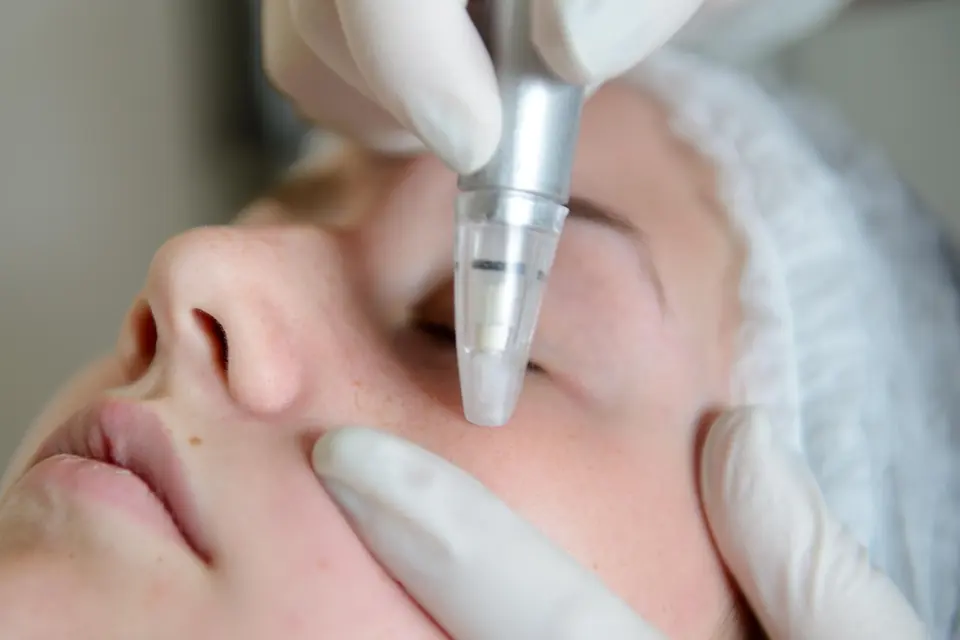
Picosecond (“pico”) lasers fire extremely short pulses of light, measured in trillionths of a second. The pulses shatter pigment mainly through a pressure effect rather than heat, using less energy than older nanosecond (Q-switched) lasers.
The evidence differs by use:
| Use | What studies show |
|---|---|
| Tattoo removal | Strongest evidence |
| Melasma | Can help, especially with the 1064 nm wavelength. Results are often similar to, not better than, prescription creams, and melasma usually returns without maintenance |
| Acne scars | Moderate improvement over about six sessions with a fractional lens |
| Sunspots and freckles | Often respond well, but are a different condition from melasma |
For melasma, a 2023 analysis of trials found the 1064 nm pico laser effective without significant side effects, while the 755 nm laser was no better than creams and more likely to cause darkening. A 2026 review concluded that no single device is a definitive answer, and that maintenance is crucial.
Risks for Asian and darker skin
Brown skin is more prone to pigment changes after any laser. Possible effects include:
- Darkening (post-inflammatory hyperpigmentation), usually temporary but sometimes lasting months.
- Rebound melasma, where melasma comes back darker.
- Patchy white spots (mottled hypopigmentation), reported in about 10% of East Asian patients after repeated low-energy “laser toning”, and linked to too much total energy.
- Redness, swelling, blistering and, rarely, scarring or burns, which are more common when an untrained person operates the laser.
Avoid sun exposure before and after treatment, and tell the doctor if you are pregnant, take medicines that make the skin sensitive to light, or get cold sores.
Malaysia’s 2026 rules on aesthetic lasers
Since 1 June 2026, the Medical Device (Designated Medical Device) Order 2026 lists many aesthetic lasers as designated medical devices. These include Nd:YAG (532 and 1064 nm), alexandrite, ruby, diode, fractional CO2 and other lasers when used to reduce pigmentation such as melasma and freckles, or for other aesthetic purposes. HIFU devices are also covered.
Under the Medical Device Act 2012, no one may operate a designated medical device without a permit. The penalty is a fine of up to RM100,000, up to a year in prison, or both. The Medical Device Authority says operators must have qualifications and skills recognised by the government.
The Ministry of Health’s guidelines also class lasers for pigmentation as an aesthetic medical procedure, to be done by a registered doctor with the right training and credentials, in a registered clinic. A medical-grade laser in a salon or spa is a red flag.
How to check a clinic before booking
- Doctor: look them up on the Malaysian Medical Council’s MeRITS register and ask whether they hold a Letter of Credentialing and Privileging (LCP) for aesthetic procedures.
- Clinic: it should be registered with the Ministry of Health, not a salon or home business.
- Device: ask which laser will be used and check it on the MDA medical device register.
- Plan: ask for a diagnosis, the expected number of sessions, the risks for your skin type, what happens if pigmentation gets worse, and a written quote.
A warning about whitening creams
Many people with melasma try lightening creams bought online. Some contain hidden ingredients. In 2025 and 2026, the National Pharmaceutical Regulatory Agency (NPRA) cancelled the notification of 20 cosmetic products for containing mercury, hydroquinone or tretinoin. Half of them contained mercury.
- Mercury is banned in cosmetics. It can damage the kidneys and nerves, and harm the developing brain of an unborn baby or young child.
- Hydroquinone and tretinoin are medicines in Malaysia, not cosmetic ingredients. They should only be used with a health professional’s advice.
Check a product on NPRA’s list of cancelled cosmetics before using it, and stop using any cream that is not properly labelled.
See a doctor if a patch
- is changing in size, shape or colour
- bleeds, itches or doesn’t heal
- appears on only one side, or looks different from your other marks
Finding a doctor for pigmentation
A GP can diagnose your pigmentation and start first-line treatment, and refer you to a dermatologist if needed. For laser treatment, choose a doctor-led aesthetic clinic and check the doctor, clinic and device first. Our directory lists GP and aesthetic clinics with opening hours and directions.
Browse the clinic directoryFrequently asked questions
Can pico laser remove melasma permanently?
No. Pico laser can lighten melasma, but no treatment cures it, and melasma often returns, especially with sun exposure or hormonal changes. Ongoing sun protection and maintenance are usually needed.
Is pico laser safe for Malaysian skin?
It can be, in trained hands with suitable settings. Brown skin has a higher risk of darkening, rebound melasma and white spots after lasers, so a doctor should assess your skin and start cautiously.
How many pico laser sessions are needed for melasma?
Studies used anywhere from three to about ten sessions, usually several weeks apart, followed by maintenance. Your doctor should give you a plan based on your skin.
Who is allowed to do laser treatment in Malaysia?
Since 1 June 2026, many aesthetic lasers are designated medical devices, and operating one requires a permit from the Medical Device Authority. MOH guidelines also class laser pigmentation treatment as a medical procedure for trained, registered doctors in registered clinics.
What is the best treatment for melasma?
Daily broad-spectrum sunscreen, ideally tinted with iron oxides, plus prescription creams supervised by a doctor, is the usual first-line treatment. Lasers are generally kept for melasma that doesn’t respond.
Sources
- DermNet — Melasma
- British Association of Dermatologists — Melasma patient information leaflet (2024)
- American Academy of Dermatology — How to make melasma less noticeable (2023)
- Castanedo-Cazares et al. — Visible light protection in melasma, randomised trial (2014)
- International Delphi consensus on melasma management (2026)
- Meta-analysis — Tranexamic acid for melasma (2024)
- Lee et al. — Low-fluence Q-switched Nd:YAG laser for melasma, systematic review (Medicina, 2022)
- Feng et al. — Picosecond lasers for melasma, meta-analysis (2023)
- Wu, Goldman & Chan — Picosecond lasers: a systematic review (2021)
- Dermatologic Clinics — Lasers and energy devices for melasma (2026)
- American Academy of Dermatology — Laser tattoo removal
- Medical Device Authority — Medical Device (Designated Medical Device) Order 2026, P.U.(A) 10
- Medical Device Authority — Medical Device Act 2012 (Act 737)
- Berita RTM — Medical Device Order in force on 1 June (9 Jan 2026)
- The Star — Tighter checks urged on aesthetic industry (13 Jul 2026)
- NPRA — Cancellation of notified cosmetic products
- KKM / NPRA — Media statement on cosmetics containing scheduled poisons (Nov 2025)