Bowel cancer in Malaysia: symptoms, free stool test screening and colonoscopy
Bowel cancer, also called colorectal or colon cancer (kanser usus), is now the most common cancer in Malaysian men and the second most common in women. Three in four cases are found only at a late stage, yet a simple home stool test can pick it up early, when it is far more treatable. Here are the symptoms, who should be screened, and how to get tested in Malaysia.

Key points
- Bowel cancer is the most common cancer in Malaysian men and the second most common in women. Cases rose by more than half between 2012–2016 and 2017–2021.
- About 3 in 4 cases are diagnosed at stage 3 or 4. Early bowel cancer often causes no symptoms.
- Symptoms include blood in the stool, a change in bowel habit, tummy pain or bloating, unexplained weight loss and tiredness from anaemia.
- Adults aged 50 to 75 at average risk should do a stool test (iFOBT), free at government health clinics. A positive result needs a colonoscopy.
- If a close relative had bowel cancer, colonoscopy screening usually starts at 40, or earlier.
Bowel cancer in Malaysia
According to the Malaysia National Cancer Registry report for 2017–2021:
- Bowel (colorectal) cancer made up 14.1% of all cancers, the second most common overall after breast cancer, and the most common cancer in men.
- About 23,900 people were diagnosed in those five years, up 54% from 2012–2016. About 15% were under 50.
- About three in four cases with a known stage were found at stage 3 or 4. Only about 6% were caught at stage 1.
- The lifetime risk is about 1 in 44 for men and 1 in 62 for women, and highest among Chinese Malaysians (1 in 30 men).
Finding it early makes a big difference. In US data, about 9 in 10 people whose cancer is found before it spreads are alive 5 years later, compared with about 1 in 7 when it has spread to distant organs.
Bowel cancer symptoms (kanser usus simptom)
- Blood in your stool, which may look red or black, or bleeding from the bottom
- A change in bowel habit, such as looser stools, constipation or going more often, lasting several weeks
- Feeling you need to go even after you have just been
- Tummy pain, a lump in the tummy, or bloating
- Losing weight without trying
- Tiredness or breathlessness from anaemia (low blood count)
Most people with these symptoms don’t have cancer. Haemorrhoids (piles), for example, are a common cause of bleeding. But you can’t tell the difference yourself, so always get bleeding from the bottom checked by a doctor. Malaysian guidelines advise an urgent colonoscopy within 2 weeks for unexplained rectal bleeding with a change in bowel habit or weight loss, or for iron-deficiency anaemia.
Early bowel cancer often causes no symptoms at all, which is why screening matters.
Who is at higher risk?
- Being 50 or older, though younger adults can get it
- A close relative (parent, brother, sister or child) with bowel cancer, or inherited conditions such as Lynch syndrome
- A history of bowel polyps, or inflammatory bowel disease (Crohn’s disease or ulcerative colitis)
- Smoking, alcohol, being overweight and being inactive
- A diet high in processed meat (such as sausages, ham and luncheon meat) and red meat, and low in fruit and vegetables. The WHO’s cancer agency classifies processed meat as a cause of bowel cancer.
Free bowel cancer screening: the stool test
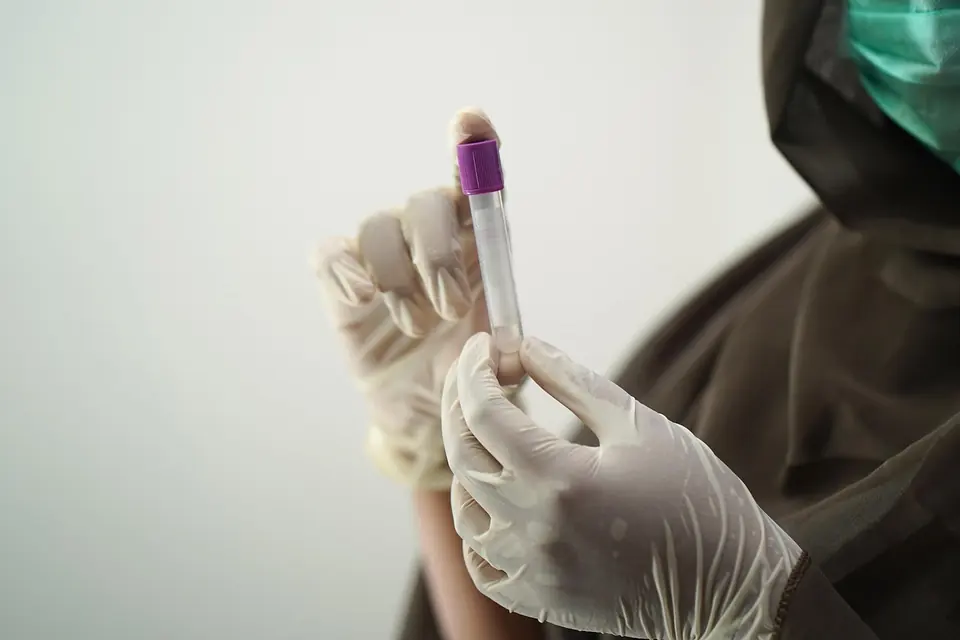
Malaysian guidelines recommend that adults aged 50 to 75 at average risk do an immunochemical faecal occult blood test (iFOBT), also called a FIT test. It detects tiny amounts of blood in the stool that you can’t see.
- Where: it is offered free at government health clinics (Klinik Kesihatan), apart from the registration fee. Ask for it at your next visit. Selangor’s Selangor Saring programme has also included the test. Private clinics and pharmacies offer it for a fee.
- How: you collect a small stool sample at home with the kit, and return it to the clinic. There are no diet restrictions.
- How often: the 2017 guidelines recommend yearly testing if negative. Some clinics schedule a repeat every 2 years.
- If positive: you are referred for a colonoscopy. A positive test doesn’t mean you have cancer. Most positives are due to polyps or other causes, but it must be followed up.
Too few Malaysians take part. Between 2014 and 2018, only about 55% of people with a positive stool test went on to have the colonoscopy they needed. In Selangor’s screening programme, only 15–27% of people with abnormal results followed up. If your test is positive, please go for the colonoscopy.
If bowel cancer runs in your family
Malaysian guidelines recommend colonoscopy, rather than the stool test, for people with a family history:
| Family history | When to start colonoscopy |
|---|---|
| A parent, brother, sister or child diagnosed before 60, or any relative before 50 | At 40, or 10 years younger than the youngest relative was at diagnosis, whichever is earlier. Repeat every 3 to 5 years. |
| A parent, brother, sister or child diagnosed at 60 or older | At 40. Repeat every 10 years. |
Tell your doctor about your family history, including the age your relative was diagnosed.
What happens during a colonoscopy
A colonoscopy uses a thin, flexible tube with a camera to look inside the large bowel. It can find cancer early, and remove polyps before they turn into cancer.
- Before: you follow a special diet and take a strong laxative to empty the bowel.
- During: the test usually takes 30 to 45 minutes. You are usually offered sedation and painkillers. Polyps can be removed and small samples (biopsies) taken.
- After: don’t drive for 24 hours if you had sedation. Slight bleeding for a day or two is common.
- Risks: serious complications are uncommon. In the UK screening programme, a tear in the bowel happens in about 1 in 1,700 colonoscopies.
Treatment
Surgery to remove the cancer is the main treatment and offers the best chance of cure. Chemotherapy and radiotherapy may be used before or after surgery, and newer targeted treatments and immunotherapy help some people with advanced cancer. Treatment is planned by a team of specialists.
You can lower your risk by staying active, keeping a healthy weight, not smoking, limiting alcohol, eating less processed and red meat, and eating more fruit and vegetables.
Where to ask about bowel cancer screening
Your nearest Klinik Kesihatan offers the free stool test from age 50. Private GP clinics can also arrange a stool test, check symptoms such as bleeding, and refer you for colonoscopy. Our directory lists GP clinics across Kuala Lumpur, Selangor and other states.
Browse the clinic directoryFrequently asked questions
What are the symptoms of bowel cancer? (Kanser usus simptom)
Blood in the stool or bleeding from the bottom, a change in bowel habit lasting weeks, tummy pain or bloating, unexplained weight loss, and tiredness from anaemia. Early bowel cancer often has no symptoms.
Is bowel cancer screening free in Malaysia?
Yes. The iFOBT stool test is offered free at government health clinics for adults aged 50 to 75 at average risk, apart from the registration fee. A positive result is followed by a colonoscopy at a government hospital.
How is the iFOBT stool test done?
You collect a small stool sample at home using the kit and return it to the clinic. It detects hidden blood. There are no diet restrictions.
At what age should I start bowel cancer screening?
At 50 for most people. If a close relative had bowel cancer, colonoscopy usually starts at 40, or 10 years before the age your relative was diagnosed, if they were under 60.
Can bowel cancer affect young people?
Yes. About 15% of bowel cancers in Malaysia in 2017–2021 were in people under 50. Don’t ignore symptoms such as bleeding because you are young.
Is bleeding from the bottom always cancer?
No. Haemorrhoids (piles) and fissures are common causes. But you can’t tell the cause yourself, so always have rectal bleeding checked by a doctor.
Sources
- Institut Kanser Negara — Summary of Malaysia National Cancer Registry Report 2017–2021 (Jul 2024)
- Ministry of Health — Clinical Practice Guidelines: Management of Colorectal Carcinoma (2017), Quick Reference
- Ministry of Health — Clinical Practice Guidelines: Management of Colorectal Carcinoma (2017)
- Chandran et al. — Overview of the colorectal cancer screening programme in Malaysia (Med J Malaysia, 2020)
- PLOS ONE — Colorectal cancer screening in Malaysian primary care (Dec 2022)
- CodeBlue — Selangor Saring reveals reluctance for follow-ups (27 Aug 2025)
- NHS — Bowel cancer symptoms (Sep 2026)
- World Health Organization — Colorectal cancer fact sheet (Feb 2026)
- IARC — Consumption of red meat and processed meat (Oct 2015)
- GOV.UK — Bowel cancer screening: having a colonoscopy (Jun 2025)
- American Cancer Society — Survival rates for colorectal cancer (Jan 2026)